
Call us now :08071269349
 Send Inquiry
 Send Inquiry
Diethylaluminium Chloride 0.9M
Price 5000 INR/ Liter
MOQ : 100 Liters
Diethylaluminium Chloride 0.9M Specification
- Density
- 0.8760g/mL Gram per millilitre (g/mL)
- Properties
- CAS 96-10-6 Molecular Formula C4H10AlCl Molecular Weight (g/mol) 120.56
- Product Type
- liquid
- Application
- Industrial
- Molecular Formula
- C4H10AlCl
- Solubility
- Solubility in water: reacts
- Structural Formula
- ClAl(CH2CH3)2
- CAS No
- 96-10-6
- Molecular Weight
- 120.56 Grams (g)
- Usage
- industry
- Purity
- 0.9M in TOLUNE
- Grade
- chemical
- Physical Form
- Liquid
- Storage
- Room Temperature
Diethylaluminium Chloride 0.9M Trade Information
- Minimum Order Quantity
- 100 Liters
- Supply Ability
- 500 Liters Per Day
- Delivery Time
- 1-7 Days
- Packaging Details
- bottle
- Main Domestic Market
- All India
Diethylaluminium Chloride 0.9M About
CAS:96-10-6
Molecular Formula:C4H10AlCl
Molecular Weight:120.56
Synonym:diethylaluminum chloride, aluminum, chlorodiethyl, diethylaluminium chloride, deac, chlorodiethylaluminum, diethylchloroaluminum, diethylaluminum monochloride, deak, aluminum diethyl monochloride, aluminum, dichlorotetraethyldi
Exceptional Catalyst for Industrial Synthesis
Diethylaluminium Chloride is widely recognized for its catalytic properties in organic synthesis, especially in polymerization and alkylation processes. Its high reactivity and purity make it an essential component in industrial chemical manufacturing workflows, helping streamline operations and optimize production yields.
Safe Storage and Handling Guidelines
This compound is highly reactive with water; therefore, it should be stored at room temperature in a moisture-free environment. Proper storage prevents hazardous reactions and maintains the product's efficacy. Using suitable personal protective equipment and handling protocols ensures workplace safety while dealing with this chemical grade product.
FAQ's of Diethylaluminium Chloride 0.9M:
Q: How should Diethylaluminium Chloride 0.9M in Toluene be stored to maintain stability?
A: It should be stored at room temperature in a tightly sealed container, protected from moisture and water, as it reacts vigorously with water, ensuring long shelf life and safety.Q: What are the primary industrial uses of Diethylaluminium Chloride 0.9M?
A: This product is predominantly used as a catalyst in organic synthesis and polymerization processes, supporting industries such as chemical, pharmaceutical, and materials manufacturing.Q: When is it necessary to use personal protective equipment with this chemical?
A: Personal protective equipment should be worn at all times when handling Diethylaluminium Chloride, as direct contact or exposure to moisture can lead to hazardous reactions.Q: Where can this compound be sourced in India?
A: Diethylaluminium Chloride 0.9M is available through distributors, manufacturers, suppliers, and traders throughout India, catering to industrial requirements.Q: What is the benefit of using Diethylaluminium Chloride in industrial processes?
A: Its high reactivity and selectivity as a catalyst enhance the efficiency and yield of chemical reactions, making industrial processes more cost-effective and reliable.Q: How does Diethylaluminium Chloride interact with water?
A: This compound reacts with water, often violently, producing flammable gases; thus, it must be handled in dry conditions to prevent dangerous decomposition.Q: What is the process for safely disposing of unused Diethylaluminium Chloride?
A: Unused product should be neutralized by professionals in controlled conditions, avoiding water contact, and disposed of in accordance with local hazardous waste regulations.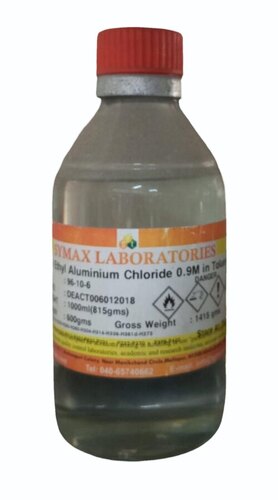
Tell us about your requirement

Price:
Quantity
Select Unit
- 50
- 100
- 200
- 250
- 500
- 1000+
Additional detail
Mobile number
Email

More Products in Industrial Chemicals Category

Hydrogen chloride solution 2.0 M in diethyl ether
Minimum Order Quantity : 100 Liters
Physical Form : Liquid
CAS No : 7647010 (HCl), 60297 (Diethyl ether)
Grade : Analytical Reagent (AR) / Laboratory Grade
Purity : 2.0 M HCl (in Diethyl Ether)
3 Amino chloro Pyridine
Price 5000 INR / Liter
Minimum Order Quantity : 100 Liters
Physical Form : Other, Crystalline solid
CAS No : 767000
Grade : Industrial and pharmaceutical grade
Purity : 98%
Sodium Tri-Acetoxy Borohydride Chemical
Price 4000 INR
Minimum Order Quantity : 10
Physical Form : Powder
CAS No : 56553607
Grade : Laboratory Grade / Industrial Grade
Purity : >97%
4-Bromo-1Butene Cas.No. 5162-44-7
Price 1000 INR
Minimum Order Quantity : 25
Physical Form : Liquid
CAS No : 5162447
Grade : Industrial Grade
Purity : 98%

 Send Inquiry
Our Products

Plot No. A-28/1/14D, Industrial Park Lane, IDA Nacharam,Hyderabad - 500076, Telangana, India

Mr R C MURTHY
(Managing Partner)
Mobile :08071269349
 Send Inquiry
 Send SMS
Developed and Managed by Infocom Network Private Limited.
